




.webp)
.webp)

.webp)

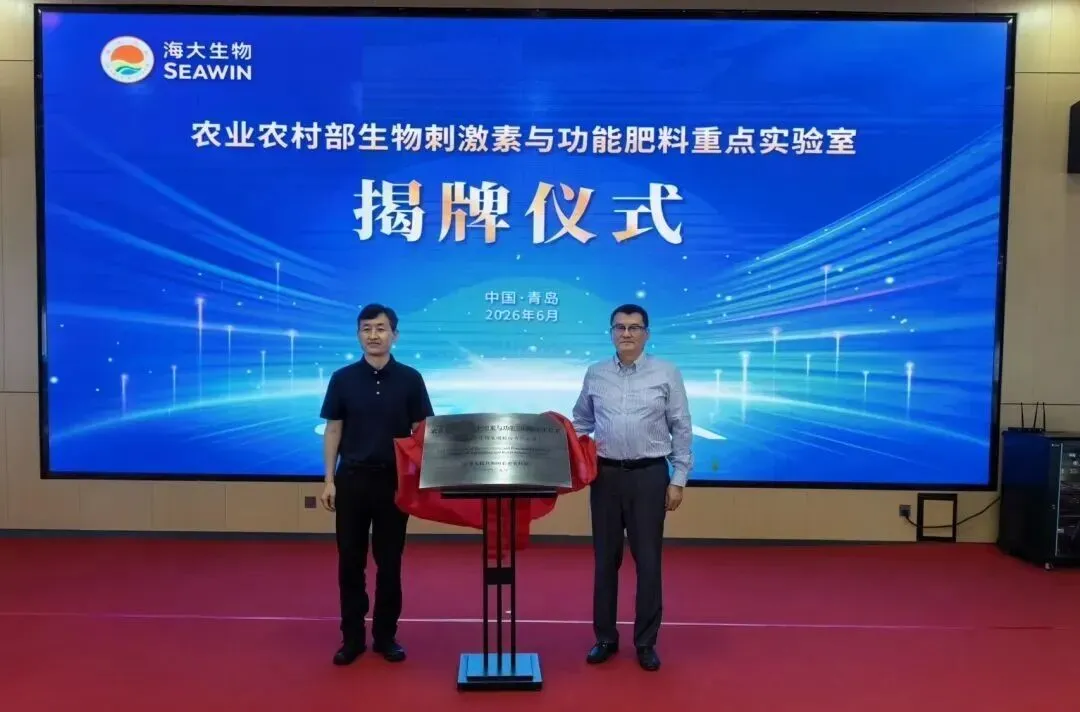
On June 16, the unveiling ceremony of the Key Laboratory of Biostimulants and Functional Fertilizers of the Ministry of Agriculture and Rural Affairs, along with the first meeting of the Academic Committee, was held in Qingdao. As a national-level innovation platform in China's green fertilizer field, this event gathered academicians and experts, government authorities, research institutes, leading industry enterprises, and industry media to jointly witness the domestic biostimulant and functional fertilizer industry entering a new innovation-driven stage.
This laboratory was established by Qingdao Haida Bio Group(hereinafter referred to as Haida Bio) takes the lead in construction. Leveraging Qingdao's unique marine biological resource advantages, it has established a deep industry-academia-research collaborative mechanism to precisely resolve technical bottlenecks in the industry, fill gaps in the standard system, accelerate the transformation of scientific research achievements into practical applications, and lay a solid technological foundation for controlling fertilizer quantities, improving efficiency, enhancing arable land quality, and ensuring national food security.
Currently, China's agriculture is accelerating its shift away from the traditional planting model dependent on chemical fertilizers, and green ecological agriculture has become an inevitable trend. Under the hard requirements of controlling fertilizer use, improving soil, enhancing quality, and increasing yields, biostimulants and functional fertilizers have evolved from optional to essential. The official establishment of this national-level key laboratory at Haida Bio is not only an authoritative recognition of the enterprise's innovation strength in the green agricultural input field, but also a key strategic layout for the industry to gather high-quality innovation resources, seize the opportunities of green agricultural development, and break through industry development bottlenecks.
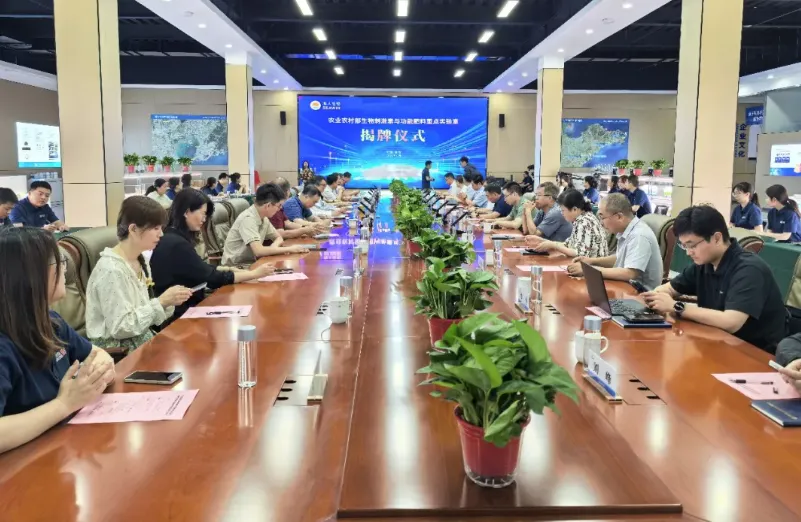
Haida Bio has been deeply engaged in the marine biological agricultural inputs sector for many years, focusing on seaweed, fish protein, and chitosanand other marine biological raw materials resource utilization. With continuous technological innovation and full industry chain layout, the company has won the National Manufacturing Single Champion qualification, firmly maintaining its industry-leading position. Shan Junwei, Chairman of Haida Bio, stated that the establishment of the national-level key laboratory is inseparable from the long-term support of competent authorities at all levels and industry experts, and it also builds a high-end innovation platform for the enterprise to deeply cultivate core technologies and enter the global green agricultural input frontier.
With the nationwide action to increase grain production capacity by 100 billion jin being fully implemented, biostimulant products with multiple functions such as soil improvement, stress resistance, growth promotion, and quality enhancement are entering a golden development period. Based on the new innovation platform, Shan Junwei identified three core strategic directions for the laboratory to precisely support the industry's breakthrough and upgrading. First, focusing on original innovation, deepening the advantages of marine biological raw materials, tackling core technologies such as microbial fermentation and molecular modification, and developing benchmark biostimulant products with independent intellectual property rights to overcome core technical challenges in the industry. Second, bridging the “last mile” between industry, academia, research, and application, closely addressing field needs such as saline-alkali land improvement, fertilizer reduction, and arable land quality enhancement, breaking down the barriers between research and market, and rapidly transforming laboratory cutting-edge technologies into practical agricultural products. Third, building a high-end industry academic platform, relying on the Academic Committee led by Academician Xu Minggang, opening project initiation, establishing innovation funds, taking the lead in improving product mechanism research and industry evaluation standard systems, filling the gap of missing industry standards, and promoting the entire industry to steadily advance toward standardization, regulation, and internationalization. “Haida Bio will use the laboratory as the core innovation engine, transforming marine resource advantages into core industrial competitiveness, closely aligning with the overall situation of national food security and green low-carbon agricultural transformation, and actively shouldering the responsibility of technological innovation and industry leadership for agricultural input enterprises,” emphasized Shan Junwei.
Song Xiao, Member of the Party Leadership Group of the Qingdao Municipal Agriculture and Rural Affairs Bureau and Secretary of the Party Committee of the Qingdao Academy of Agricultural Sciences, stated that the unveiling and establishment of this key laboratory further fills the gap in high-end scientific research platforms for Qingdao's green agricultural inputs sector. It is a landmark event showcasing the deep integration of Qingdao's agricultural scientific innovation strength with the real economy, and provides strong support for Haida Bio and even the regional green agricultural inputs industry to break through development bottlenecks and achieve quality improvement and upgrading. He put forward three requirements for the laboratory's future operation: strictly align with the management systems of ministries and commissions to achieve standardized and sustainable operation; adhere to the orientation of original innovation and complete major scientific research tasks benchmarked against international frontiers; strengthen cross-entity collaboration, linking universities, research institutes, and agricultural technology promotion systems to precisely meet the core needs of the production side.
As a representative of the co-building unit, Yi Keke, Director of the Institute of Environment and Sustainable Development in Agriculture, Chinese Academy of Agricultural Sciences, stated that the in-depth cooperation with Haida Bio is a strong alliance between the national team's top scientific research forces and industry leaders, achieving precise alignment between basic research and industrial application. The two parties will jointly tackle key technologies such as mechanism of action, industrial preparation, and field application, solve the challenges of industrial technology transformation, and truly bring scientific research results to the fields. “The Institute of Environment and Sustainable Development in Agriculture, Chinese Academy of Agricultural Sciences will fully empower the laboratory in terms of talent, projects, and platforms, building it into a domestically first-class and internationally renowned green fertilizer innovation hub, achievement transformation base, and talent cultivation cradle, helping the industry break through development bottlenecks.”
“Against the backdrop of increasingly tight constraints on arable land and water resources, the space for stabilizing production capacity through traditional fertilizers is shrinking. Biostimulants can activate crop potential and enhance stress resistance, making them an important technological means to safeguard the bottom line of food production capacity,” said Mei Xurong, former Vice President of the Chinese Academy of Agricultural Sciences and Director of the National Saline-Alkali Land Comprehensive Utilization Technology Innovation Center. He noted that the development of green agricultural inputs should not only focus on yield-increasing goals but also take into account ecological missions such as arable land restoration and agricultural non-point source pollution control. He encouraged the laboratory to adhere to the “Four Orientations”, deepen multidisciplinary cross-integration, improve the collaborative mechanism of government, industry, academia, research, and application, and use continuous technological innovation to solve industry development challenges and lead the industry toward steady and sustainable growth.
Xu Mingang, an academician of the Chinese Academy of Engineering who has been deeply engaged in farmland fertility research for many years and serves as the director of the laboratory's academic committee, pointed out that farmland is the foundation of food production. Biostimulants, with their unique advantages in soil improvement, fertility enhancement, stress resistance, and quality improvement, have become a core lever for the high-quality development of green agriculture. Haida Bio has been deeply engaged in the entire marine biological agricultural inputs industry chain for over twenty years and possesses the strong capabilities to undertake the construction of a national-level laboratory. Leading the construction of this laboratory represents high industry recognition of the enterprise's innovation capabilities and industrial heritage, and also entrusts the enterprise with the important mission of leading the industry in breaking through bottlenecks and achieving iterative upgrades.
Xu Mingang outlined three core work priorities for the laboratory: first, closely aligning with the national core strategies of farmland protection and food security, focusing on original scientific research to address frontline industry challenges such as saline-alkali land improvement and fertilizer reduction; second, building a comprehensive industry-academia-research collaboration network to accelerate the deployment and promotion of new technologies and products, solving the lag in scientific research commercialization; third, adhering to the principle of open sharing, building a high-end academic exchange platform, strengthening the cultivation of young scientific research talent, and consolidating the foundation of industrial innovation. At the same time, he expressed high hopes for the laboratory and industry development, hoping that the platform would anchor on the three bottom lines of food security, farmland protection, and ecological security to tackle core technologies, persist in source innovation to produce landmark scientific research achievements, proactively shoulder industry responsibilities, lead the improvement of biostimulant industry standards, fill the gaps in industry norms, and help the industry break through development bottlenecks.
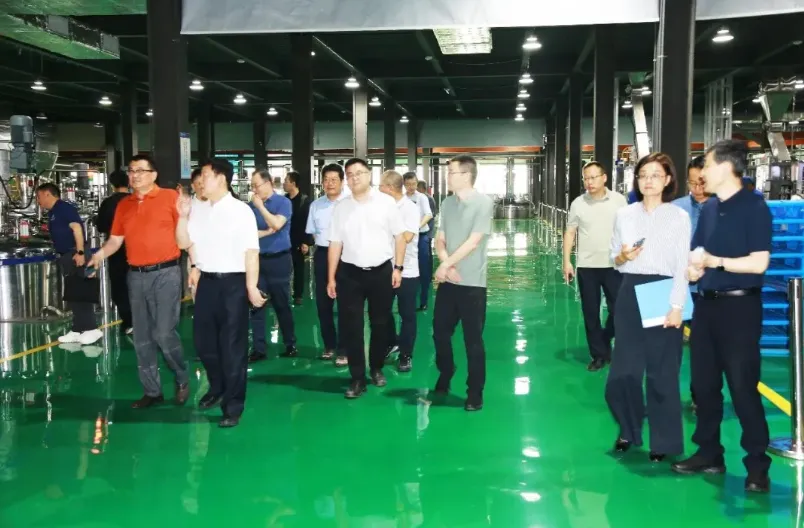
Participating experts unanimously agreed that the establishment of this national-level key laboratory at Haida Bio fills the gap in high-end collaborative innovation platforms in China's biostimulant and functional fertilizer field. The platform will fully integrate high-quality industry-academia-research resources nationwide, directly address core pain points such as industry technical bottlenecks, missing standards, and slow commercialization of research results, accelerate the iterative upgrading of new functional fertilizers, continuously solve development challenges in the green agricultural input industry, lead the green and low-carbon transformation of the domestic agricultural input industry, and inject strong innovation momentum into the efficient, safe, resource-saving, and environmentally friendly high-quality development of China's modern agriculture.
.webp)